I write about the LA market the way I talk to my own clients: real numbers, no spin.
If you own a higher-value property in the City of Los Angeles, there is one number you need to know about the LA Mansion Tax before you ever discuss a list price: $5.4 million.
That’s where Measure ULA — what most people call the mansion tax — currently begins. And the way it’s structured produces a result most sellers find hard to believe the first time they see it: crossing the threshold by one dollar can cost you more than $200,000.
Here’s how it actually works, where the cliff sits, and what sellers near the line should understand before listing.
A quick disclaimer. I’m a licensed California REALTOR®, not a tax attorney or CPA. Measure ULA involves real money and real complexity, and thresholds adjust annually. Confirm current figures with the Los Angeles Office of Finance and your own tax and legal advisors before making decisions.
The short version
- Measure ULA applies only inside the City of Los Angeles. Beverly Hills, Santa Monica, West Hollywood, Culver City and other separately incorporated cities are not subject to it.
- Current rates: 4% on sales from $5.4 million to $10,899,999, and 5.5% on sales of $10.9 million or more.
- It’s charged on the entire sale price — not just the amount above the threshold. This is the single most important thing to understand.
- That creates a cliff. A sale at $5,400,000 owes roughly $216,000. A sale at $5,399,999 owes nothing.
- Thresholds adjust every July for inflation, which is why the entry point moved from $5.3 million to $5.4 million on July 1, 2026.
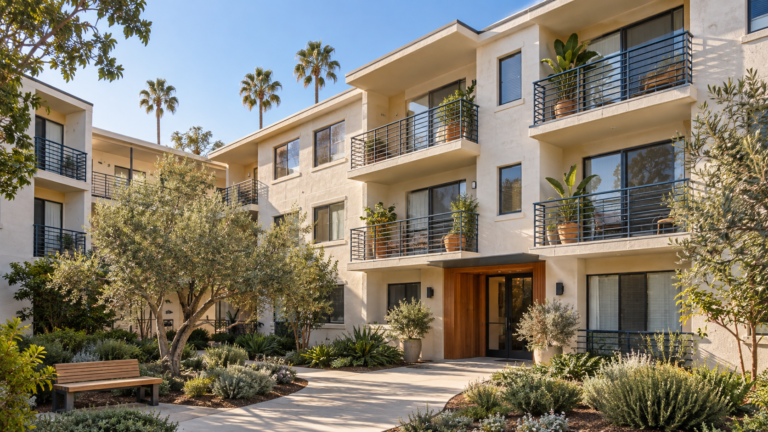
- It isn’t just mansions. It applies to residential, commercial and industrial property, including multi-unit buildings.
How Measure ULA actually works
Measure ULA is a transfer tax on real property sales within the City of Los Angeles. As of July 1, 2026, the rate is 4% on transactions from $5.4 million up to $10,899,999, and 5.5% on transactions of $10.9 million and above.
The crucial mechanic — and the one that catches people — is that the tax applies to the full gross sales price, not to the portion above the threshold.
That is not how most people expect a tax to work. Income tax is marginal: you pay a higher rate only on the dollars above each bracket. Measure ULA isn’t marginal. Cross the line, and the rate applies to the whole number.
It also applies regardless of whether you made money. There is no adjustment for your purchase price, your basis, your improvements, or your mortgage. A seller who bought at $5.2 million and sells at $5.5 million — a loss after costs — still owes the tax on the full $5.5 million.
The cliff, in actual dollars
At the 4% threshold, the first dollar over the line costs roughly $216,000. At the 5.5% threshold, it costs roughly $599,500.
| Sale price | ULA rate | ULA owed | Net after ULA |
|---|---|---|---|
| $5,399,000 | — | $0 | $5,399,000 |
| $5,400,000 | 4% | $216,000 | $5,184,000 |
| $5,700,000 | 4% | $228,000 | $5,472,000 |
| $10,899,000 | 4% | $435,960 | $10,463,040 |
| $10,900,000 | 5.5% | $599,500 | $10,300,500 |
Read the first two rows again. A thousand dollars more on the sale price produces $216,000 less in the seller’s pocket.
And look at the last two rows. Selling at $10,900,000 nets you roughly $162,000 less than selling at $10,899,000.
There is a genuine dead zone just above each threshold where a higher sale price leaves you with less money. A seller who doesn’t know where those zones are can negotiate themselves into one.
(These figures are illustrative and cover ULA only. They don’t include the county documentary transfer tax, commissions, or other closing costs, which apply separately.)
Where it applies — and where it doesn’t
Measure ULA is a City of Los Angeles measure. A property with a Los Angeles mailing address is not necessarily in the City of Los Angeles, and that distinction is worth hundreds of thousands of dollars at these price points.
Not subject to ULA: Beverly Hills, West Hollywood, Culver City, Burbank, Glendale, Pasadena, and the other separately incorporated cities. Santa Monica is outside ULA but operates its own transfer tax.
This is the same jurisdictional trap I wrote about in the Redondo Beach guide, where Hollywood Riviera homes carry a Redondo mailing address but sit inside the City of Torrance. At ULA price points, getting the jurisdiction wrong is an expensive mistake. Verify the parcel, not the envelope.
Also worth knowing:
- It isn’t limited to houses. Residential, commercial and industrial property all fall under it, including apartment buildings and multi-unit properties.
- It applies to transfers for consideration. Inheriting a property does not by itself trigger ULA — though if you then sell it, the sale can. If you’re in that situation, the property tax side matters too; I covered that in the Proposition 19 breakdown.
- Exemptions are narrow. Primarily qualified 501(c)(3) nonprofits, government entities, and certain affordable housing providers. There is no exemption for seniors, first-time sellers, or hardship.
The thresholds move every July
The thresholds are adjusted annually for inflation, based on the Chained Consumer Price Index. That’s why the 4% entry point rose from $5.3 million to $5.4 million on July 1, 2026, and the upper tier from $10.6 million to $10.9 million.
For a seller sitting close to the line, timing is a real variable. A property that would have been taxable at $5.35 million in June 2026 sits under the threshold at the same price in July.
I’d be careful about over-engineering around this. Thresholds move modestly, the adjustment amount isn’t known far in advance, and holding a property for months to chase a threshold has its own costs. But if you’re closing near a threshold in late June, the question of whether escrow lands before or after July 1 is worth asking your escrow officer about directly.
What sellers near the threshold should actually do
- Find out where you stand before you set a list price. If a realistic value lands within a few hundred thousand dollars of $5.4 million, the threshold should shape your pricing strategy from day one — not surface during negotiation.
- Know the dead zone. At the 4% tier, any sale price between roughly $5.4 million and $5.63 million nets you less than a sale at $5,399,000. Pricing into that band serves nobody.
- Model your actual net, not your gross. At these price points the gap between the two is large enough that a seller optimizing for headline price can end up with less money.
- Get your tax and legal advisors involved early. Structure, entity ownership, and timing questions are genuinely complex here and belong with professionals, not with your agent alone.
- Confirm the jurisdiction. One parcel check, done early, before anyone assumes.
Frequently asked questions
What is the LA mansion tax in 2026?
Measure ULA is a transfer tax on property sales within the City of Los Angeles. As of July 1, 2026, it is 4% on sales from $5.4 million to $10,899,999, and 5.5% on sales of $10.9 million or more. It is calculated on the full sale price, not just the portion above the threshold.
Is Measure ULA charged on the whole sale price or just the amount over the threshold?
The whole sale price. This is what produces the cliff effect — a sale at $5,400,000 owes roughly $216,000, while a sale at $5,399,999 owes nothing.
Does Measure ULA apply in Beverly Hills or Santa Monica?
No. Measure ULA applies only within the City of Los Angeles. Beverly Hills, West Hollywood, Culver City and other separately incorporated cities are not subject to it, though Santa Monica has its own transfer tax. Verify the parcel’s actual jurisdiction rather than relying on the mailing address.
Does the mansion tax apply if I lose money on the sale?
Yes. Measure ULA is based on the gross sale price, with no adjustment for your purchase price, basis, improvements, or mortgage. A seller who sells at a loss above the threshold still owes it.
Are there exemptions from Measure ULA?
Exemptions are narrow — primarily qualified 501(c)(3) nonprofits, government entities, and certain affordable housing providers. There is no exemption for senior citizens, first-time sellers, or financial hardship.
Do the ULA thresholds change?
Yes, annually each July, adjusted for inflation using the Chained Consumer Price Index. The 4% entry point rose from $5.3 million to $5.4 million on July 1, 2026.
Does Measure ULA apply to apartment buildings?
Yes. It applies to residential, commercial and industrial property within the City of Los Angeles, including multi-unit buildings — not only single-family homes.
The bottom line
Measure ULA is often discussed as a tax on the very wealthy, and at $10.9 million that framing holds. At $5.4 million it covers a meaningful share of single-family homes in the hills and on the Westside — properties owned by people who would not describe themselves as mansion owners.
The part that genuinely costs sellers money is not the rate. It’s the structure. Because the tax hits the full sale price rather than the amount above the threshold, there’s a band just above each line where selling for more leaves you with less — and a seller who doesn’t know where that band sits can negotiate straight into it.
If you own a property anywhere near these thresholds and want to understand what your actual net looks like at different price points, that’s a conversation worth having before you list rather than during escrow.
Caroline Park · 310-800-2680 · cp@caroline-park.com
— Caroline
Sources: Measure ULA rates and thresholds effective July 1, 2026, per published Los Angeles transfer tax guidance; City of Los Angeles Office of Finance.
Disclosure: I am a licensed California REALTOR® (DRE #02250901). I am not a tax attorney or CPA. This post is general real estate commentary and is not tax or legal advice. Figures are illustrative, cover Measure ULA only, and exclude county documentary transfer tax, commissions, and other closing costs. Thresholds adjust annually — confirm current figures with the Los Angeles Office of Finance and your own tax and legal advisors before acting.